Free tool
Hear the four tones of Mandarin
Mandarin uses pitch to tell words apart: mā (mother) and mǎ (horse) differ only in tone. Learn the four shapes, then train your ear on thirty real words.
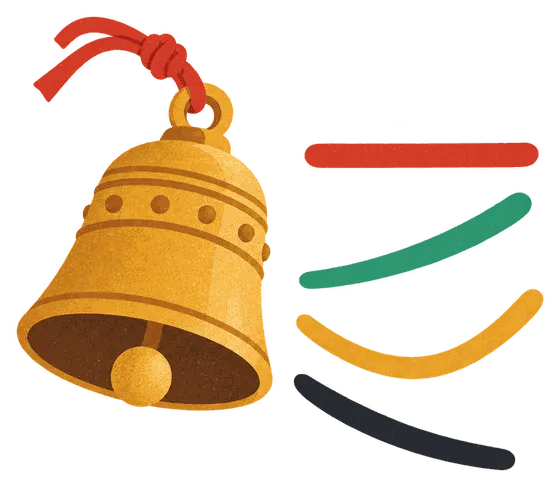
Tone 1
妈 mā
mother
High and level, like holding a note.
Tone 2
麻 má
numbing (as in Sichuan pepper)
Rising, like asking “huh?”
Tone 3
马 mǎ
horse
Low. Dip down; in fast speech it often stays low.
Tone 4
骂 mà
to scold
Falling sharply, like a firm “No!”
Test your ear
1 / 30
0 right
Which tone?
- 妈 mā Tone 1
- 麻 má Tone 2
- 马 mǎ Tone 3
- 骂 mà Tone 4
- 汤 tāng Tone 1
- 糖 táng Tone 2
- 买 mǎi Tone 3
- 卖 mài Tone 4
- 十 shí Tone 2
- 四 sì Tone 4
- 水 shuǐ Tone 3
- 睡 shuì Tone 4
- 西 xī Tone 1
- 洗 xǐ Tone 3
- 茶 chá Tone 2
- 钱 qián Tone 2
- 好 hǎo Tone 3
- 是 shì Tone 4
- 左 zuǒ Tone 3
- 右 yòu Tone 4
- 门 mén Tone 2
- 书 shū Tone 1
- 车 chē Tone 1
- 米 mǐ Tone 3
- 饭 fàn Tone 4
- 飞 fēi Tone 1
- 票 piào Tone 4
- 酒 jiǔ Tone 3
- 冰 bīng Tone 1
- 热 rè Tone 4
The four tones, plus a neutral one
Each syllable in Mandarin carries a pitch shape. Pinyin marks it over the vowel: ā (1st, high and flat), á (2nd, rising), ǎ (3rd, low and dipping), à (4th, falling). Light, unstressed syllables have no mark; that is the neutral tone, as in 吗 (ma) at the end of a question.
On this site and in the app, pinyin is colored by tone, so you can see the melody of a phrase at a glance: tone 1, tone 2, tone 3, tone 4, neutral.
Tone changes you will hear every day
A few common words change their tone depending on the next syllable. You don’t need to think about the rules if you learn whole phrases by ear, but they explain why things sound different from the dictionary.
| Rule | Example | What happens |
|---|---|---|
| Two 3rd tones in a row | 你好 nǐ hǎo | The first one rises, like a 2nd tone. Pinyin still writes nǐ hǎo. |
| 不 before a 4th tone | 不是 bú shì | 不 is bù on its own, bú before a 4th tone. Pinyin in this course shows the spoken tone. |
| 一 before a 4th tone | 一个 yí ge | 一 is yī when counting, yí before a 4th tone (个 is originally gè)… |
| 一 before tones 1, 2 and 3 | 一点 yìdiǎn | …and yì before the other tones. |
How to practice
- Exaggerate at first. Make the 2nd tone rise clearly and the 4th fall hard. You can relax later.
- Learn tones with words, not alone. Remember 谢谢 as “falling + light”, not as two separate syllables.
- Listen slowly, then at speed. On every phrase page, the turtle button plays the recording slower.
Questions
Do tones really matter for travelers?
Yes, but less than you fear. In context people often understand a wrong tone, especially in short set phrases. Getting the tones of your most-used words right (你好, 谢谢, 多少钱) makes everything easier.
What is the neutral tone?
Some syllables are light and short with no tone of their own, such as the question word 吗 (ma) or the second 谢 in 谢谢 (xièxie). Pinyin writes them without a mark; we color them grey.
How long does it take to hear the tones?
Most learners start telling single tones apart after a few short sessions of listening practice. Words in sentences take longer. A few minutes a day works better than one long session.